
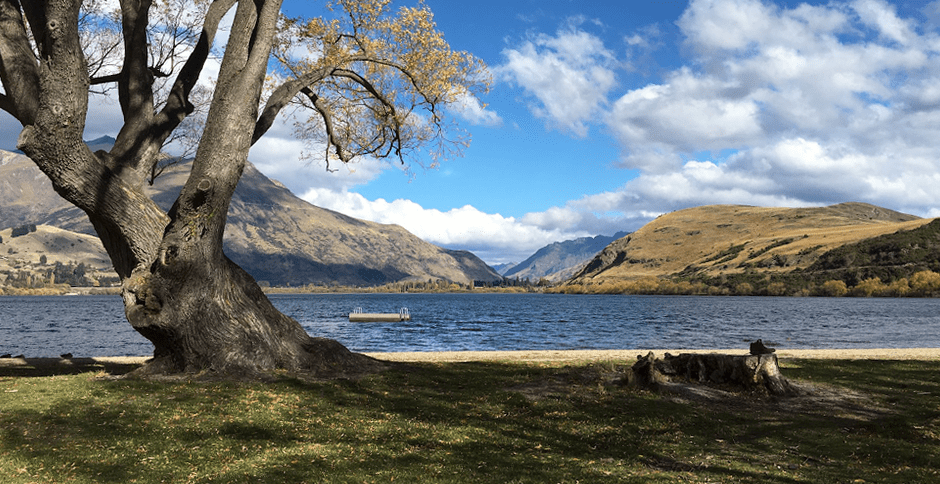
From 1 December Otago Regional Council staff will be out and about testing water quality in lakes and rivers for the summer season. If you (or your dog) are thinking of swimming in Lake Hayes, you're encouraged to check the ‘Can I Swim Here?’ section of the LAWA (Land Air Water Aotearoa) website to see the latest weekly water quality results.
General Manager Strategy, Policy and Science Gwyneth Elsum says water quality is prone to change, so it is important to confirm water is safe before swimming. “Even the sites that typically have excellent water quality can see bacteria spike as a result of heavy rainfall washing contaminants from urban and rural land into waterways. That’s why we recommend people avoid swimming for 2–3 days after heavy rainfall and use the ‘Can I Swim Here?’ data to help decide if they want to swim at a particular site.”
Potentially toxic algae (cyanobacteria) can also cause water quality concerns. Don't swim if you suspect potentially toxic algae are present, and keep dogs on a leash and away from the water’s edge. A general rule of thumb is that if lake water is looking green, stay out of it and avoid any contact with algal scum. For rivers, potentially toxic algae grow on rocks and can wash up along the water’s edge in mats.
To learn more about potentially toxic algae, visit lawa.org.nz/learn/factsheets/potentially-toxic-algae/
Long-term grades refreshed
Long-term grades have been refreshed on the LAWA website for the start of the swimming season. The long-term grades provide a precautionary indication of the water quality at each swimming site. Lake Hayes at Mill Creek Shallows is one of six sites in Otago that have ‘poor’ long-term grades, which means they have elevated bacteria concentrations 5% or more of the time. A poor grade can indicate a higher risk of illness to swimmers.
In some cases, the long-term grade for a particular swimming spot may be poor while the weekly testing shows that it’s OK for swimming. Water quality results are variable from year to year; when summer is wet, rivers are generally higher and bacteria results poorer. A long, hot summer generally bodes well for water quality. That is why it is recommended that even for sites with generally good water quality, swimming is avoided for 2–3 days after heavy rainfall, as urban or agricultural runoff can affect bathing water quality.
However, at Lake Hayes a long, hot summer sometimes leads to potentially toxic algal blooms, so it is important to get familiar with what these looks like so you can avoid them.
How do I know if the water is safe for swimming?
Heavy rain tends to wash contaminants off land and into waterways, which causes bacteria spikes. At Lake Hayes, the water quality is often excellent out from the shore but faecal contamination around the shoreline is likely to be due to ducks.
Generally, if the most recent results on the LAWA website show the water quality meets the swimming guidelines, the water looks clean and clear, and there hasn't been recent heavy rainfall since the last sample date, then it is likely that the water quality will be safe for swimming.